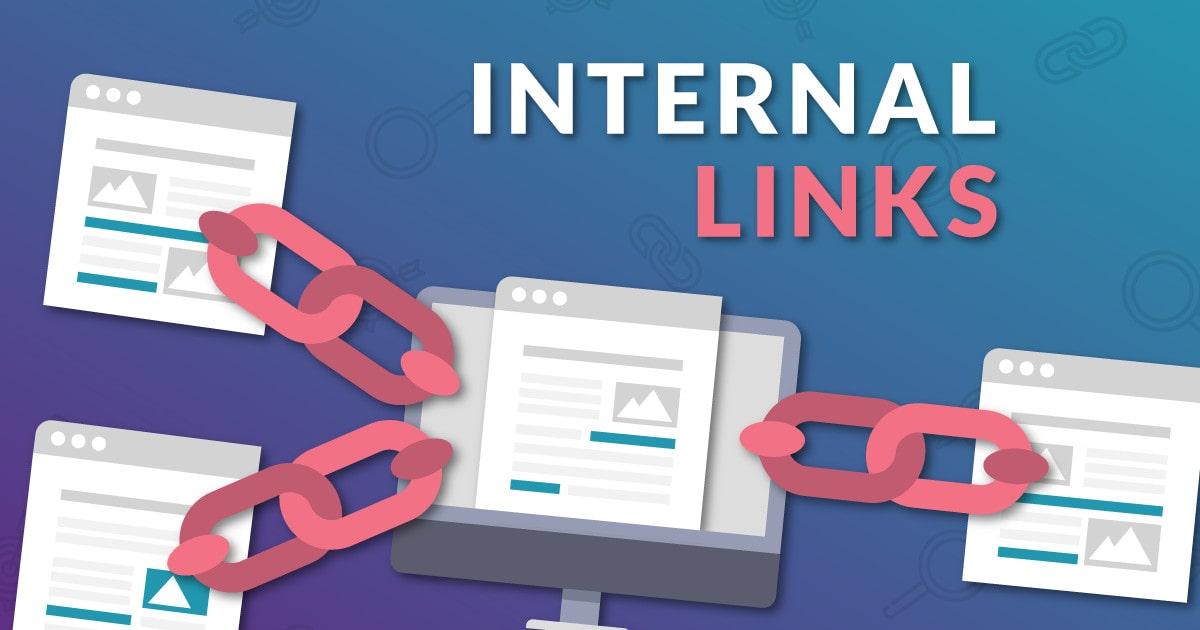
Internal linking strategies determine how PageRank and topical authority flow through your site — and getting them right is one of the highest-leverage SEO improvements you can make without a single new backlink. Every link you place from one page to another is a vote that passes ranking signals, tells Google what your site is about, and guides crawlers deeper into your content. This guide covers exactly how to build and optimise your internal linking structure to distribute authority strategically, lift rankings on priority pages, and eliminate the silent leaks that leave link equity stranded on pages that never get found.
The best part: internal links are entirely within your control. Unlike backlinks, you do not have to wait, pitch, or negotiate. You can add, move, and refine them today — and the impact is often visible in Search Console within weeks.
This guide covers how PageRank flows through internal links, how to map your site architecture for maximum authority distribution, the right way to choose anchor text, how to fix orphaned pages, how to manage crawl depth, and how to audit your internal link health on an ongoing basis.
How PageRank Flows Through Internal Links
PageRank is Google's foundational measure of a page's authority — calculated based on the quantity and quality of links pointing to it. What many site owners overlook is that internal links pass PageRank just as external backlinks do. When a high-authority page on your site links to another page, it passes a share of its authority through that link.
The amount of PageRank passed through any single link depends on how many links exist on the linking page. A page with three outgoing links distributes its authority more generously per link than a page with forty. This is why a focused, deliberate internal linking structure outperforms one where every page links to every other page indiscriminately.
The practical implication for your site
Your homepage and your most-linked pillar pages are typically your highest-authority pages. Every link from those pages to a subordinate page passes a meaningful share of authority. If your highest-authority pages only link to your contact page and your about page — rather than to your key blog posts or service pages — you are wasting the most valuable internal link equity on your entire site.
Google stopped showing public PageRank scores in 2016, but the underlying algorithm still runs. You cannot measure it directly, but you can reason about it: pages with more high-quality inbound links — both internal and external — will carry more authority and rank more easily for competitive keywords. Your job is to route that authority toward the pages you most want to rank.
Step 1: Map Your Site Architecture
Before you can direct authority anywhere, you need to understand how your site is currently structured and where link equity is already concentrated. A well-designed site architecture looks like a pyramid: the homepage at the top, category or pillar pages in the middle, and individual posts or product pages at the base. Link equity flows from top to bottom — and sideways between related pages at the same tier.
Build your link architecture map
Use the SEOGuy URL Extractor to pull every URL from your site. Then map each URL into a three-tier structure: homepage, pillar/category pages, and individual content pages. Once mapped, trace which pages are currently linking to each tier — this reveals where authority is flowing and where it is stuck.
- Tier 1 — Homepage: receives the most external backlinks; links down to all pillar pages and the most important individual pages
- Tier 2 — Pillar / Category pages: aggregate authority from the homepage; link down to related individual posts and up to the homepage
- Tier 3 — Individual posts / product pages: link up to their parent pillar page and sideways to closely related pages at the same tier
Topic clusters and the hub-and-spoke model
The hub-and-spoke model groups related content into clusters. A central "hub" page covers a broad topic comprehensively — think "SEO for beginners." The surrounding "spoke" pages cover subtopics in depth — think "how to do keyword research," "what are meta tags," "how to build backlinks." Every spoke links back to the hub, and the hub links to every spoke. This creates dense internal link clusters around each topic, which helps Google understand topical depth and authority.
Step 2: Identify Your Highest-Authority Pages
Your highest-authority pages are the ones that have earned the most external backlinks from other websites. These pages have the most PageRank to distribute internally — and linking from them to your priority pages is the fastest way to pass authority without building a single new backlink.
How to find your link-rich pages
Open any backlink analysis tool and filter your site's pages by the number of referring domains — unique websites linking to each URL. Your homepage will almost always top the list, but look for blog posts, resource pages, or tools that have organically attracted links over time. These are your authority anchors.
- Which pages have the most external backlinks pointing to them?
- Which pages rank on page one for competitive keywords — even if not in position one?
- Which pages get the most organic traffic in Google Search Console?
- Which pages are featured in resource lists, directories, or guides on other sites?
- Which pages currently link to the fewest other pages on your own site?
The last question is critical. A high-authority page that links out to only two other pages is leaving its authority largely undistributed. Adding three to five contextually relevant internal links from that page to your priority content can produce measurable ranking improvements relatively quickly.
Step 3: Identify Pages That Need More Link Equity
The pages that benefit most from additional internal links are those that are strategically important to your business — ranking targets, commercial pages, or pillar content — but are currently receiving few internal links relative to their importance.
Four categories of pages that need link equity
| Page Type | Why It Needs Links | Where to Find Links From |
|---|---|---|
| Pages ranking on page 2 | Close to page one — additional authority could push them over | Pillar pages, homepage, high-traffic posts on related topics |
| New content | Google has no authority signal for it yet; internal links accelerate discovery and indexing | Any existing related page with good authority |
| Key commercial pages | Conversion-critical but often only reachable via navigation — not contextual links | Blog posts discussing relevant topics, pillar pages |
| Pillar / hub pages | Should be your most authoritative topical pages — need links from all related spokes | All related blog posts and subtopic pages (the spokes) |
| Pages with thin inbound links | May be excellent content that is invisible to Google due to poor internal discoverability | High-authority pages covering the same broad topic |
Step 4: Choose Anchor Text That Works for SEO
Anchor text — the clickable words in a hyperlink — is a direct signal to Google about what the destination page covers. Internal link anchor text carries significant weight because you control it completely, unlike external backlinks where other sites choose the anchor text for you.
Anchor text types and when to use each
-
1Exact-match anchor textThe anchor text matches the target page's primary keyword exactly. Example: linking to your keyword research guide with the anchor "keyword research." Use this for your most important internal links — but do not overuse it. A page that receives ten identical exact-match anchors from across your site looks unnatural and can trigger over-optimisation signals.
-
2Partial-match anchor textThe anchor includes the keyword alongside other words. Example: "our guide to keyword research" or "performing effective keyword research for your blog." This is the most natural-sounding option and should make up the bulk of your internal link anchors. It signals the topic of the destination page while reading naturally in context.
-
3Branded and navigational anchor textUses your brand name or the page's title. Example: "the SEOGuy keyword density checker" or "read our on-page SEO guide." Useful for tool links and resource references where a natural sentence would include the brand or tool name rather than a bare keyword phrase.
-
4Descriptive contextual anchor textDescribes what the linked page is or does rather than matching a keyword. Example: "this step-by-step walkthrough" or "the complete checklist." This is natural in prose but carries the least topical signal — use it when context makes the destination topic clear without the anchor needing to reinforce it.
Never use generic anchors like "click here," "read more," or "this page" — they pass no topical signal to Google. Avoid stuffing the same exact-match keyword anchor on every internal link to the same destination — vary your anchors naturally. And never link to a page using anchor text that misrepresents the destination's content — this confuses both users and crawlers.
Anchor text examples — good vs poor
| Anchor Text | Type | Verdict |
|---|---|---|
| "keyword cannibalization fix" | Exact-match | Good — use sparingly |
| "how to identify and fix keyword cannibalization" | Partial-match | Good — natural and descriptive |
| "our guide on fixing content overlap issues" | Descriptive | Good — varies the anchor profile |
| "click here" | Generic | Poor — zero topical signal |
| "read more" | Generic | Poor — replace with descriptive text |
| "keyword cannibalization fix" on every link to that page | Over-optimised | Poor — diversify anchors |
Step 5: Link From High-Authority Pages to Priority Pages
This is the core execution step: systematically adding internal links from your highest-authority pages to the priority pages identified in Step 3. It is not about linking everything to everything — it is about deliberate, contextually relevant connections that add value for the reader and pass authority in the direction you need it to go.
How to find natural linking opportunities within existing content
Open one of your high-authority pages and read it in full. Look for paragraphs that mention a topic, concept, or problem that one of your priority pages addresses directly. Insert a link at that mention — not as an interruption, but as a genuine "read more about this" pointer that helps the reader go deeper. If the mention does not exist naturally, consider whether a brief sentence referencing the related topic could be added without disrupting the flow.
To find your own pages most relevant to a target, search Google for site:yourdomain.com "keyword phrase". The pages that appear are already indexed as relevant to that phrase — making them natural candidates to host a link to your target page. This takes thirty seconds per keyword and surfaces linking opportunities you might never find manually scanning your CMS.
How many internal links should a page have?
There is no strict limit, but the practical guideline is to link only when it adds genuine value for the reader. Pages with too many links dilute the authority passed through each one. A focused long-form post might naturally support eight to fifteen internal links across its content. A shorter post might support three to five. Navigation links, footer links, and sidebar links do pass some authority but carry less weight than contextual in-body links.
Step 6: Fix Orphaned Pages
An orphaned page is a page on your site that receives no internal links whatsoever — it can only be reached by someone who knows its exact URL or finds it through an external backlink. Orphaned pages are effectively invisible to Google's crawler and carry no internal authority. They are one of the most common and costly internal linking failures on established blogs and websites.
How to find orphaned pages
Use the SEOGuy URL Extractor to generate a complete list of your site's URLs. Then compare that list against the URLs discoverable via your site's internal link graph. Any URL in your sitemap that is not reachable by following links from your homepage is an orphan. Export your sitemap, crawl your site's links, and find the gaps — pages in the sitemap but absent from the crawl are the orphans to prioritise.
- A post was published but no related posts were updated to link to it
- The post is in a category that is not linked from the homepage or navigation
- Older content was never linked from newer content that covers related topics
- The page was migrated or restructured and all incoming links pointed to the old URL
- The category or tag archive page that previously linked to it was removed or noindexed
Once you identify orphaned pages, fix them by finding two to three contextually relevant pages already in your site's internal link graph and adding a natural link from each. For a blog post, this typically means updating one or two existing related posts to reference the orphan page in context. After updating, run your next crawl to confirm the page is now reachable.
Step 7: Manage Link Depth and Crawl Budget
Link depth — also called click depth — is the minimum number of clicks required to reach a page starting from the homepage. Pages that are five or more clicks deep are crawled infrequently, indexed slowly, and typically rank poorly even if their content is excellent. Google's crawler naturally spends less time and budget on pages that require many hops to reach.
The target: three clicks or fewer for important pages
Every page that matters for SEO — priority blog posts, key landing pages, pillar content — should be reachable from the homepage within three clicks. If a page is more than three clicks deep, you need to either restructure your navigation to include a more direct path, or add internal links from higher-level pages that shorten the route.
Crawl budget matters most for sites with thousands of pages — large e-commerce stores, news publications, and established blogs with hundreds of posts. For smaller sites under a few hundred pages, Google typically crawls all pages regardless of depth. But shallow link depth is still valuable: pages that are easy to reach are crawled more frequently, meaning updates get indexed faster.
Consolidate link equity — avoid wasting it on low-value pages
Every link on a page is a potential drain on authority. Links to your privacy policy, terms of service, and login pages from every page on your site collectively consume authority that could flow to your ranking targets. Use a rel="nofollow" attribute on links to pages you do not want to pass PageRank to — utility pages, login portals, and external affiliate links are common candidates. This does not hurt the linked page; it simply keeps the authority on your own site pages.
<!-- Links where you do NOT want to pass PageRank -->
<a href="/privacy-policy" rel="nofollow">Privacy Policy</a>
<a href="/login" rel="nofollow">Sign In</a>

<!-- Regular internal links that DO pass PageRank -->
<a href="/blog/keyword-cannibalization-fix">How to fix keyword cannibalization</a>
Step 8: Audit and Maintain Your Internal Link Structure
Internal link auditing is not a one-time project — it is an ongoing practice. Every time you publish a new page, you create a new opportunity to link from existing content. Every time you restructure URLs, redirect pages, or delete posts, you risk creating broken internal links that waste authority and produce 404 errors. A quarterly internal link audit catches these issues before they compound.
What a quarterly internal link audit covers
-
1Identify broken internal linksCrawl your site and flag any internal link that returns a 4xx or 5xx status code. Broken links pass no authority and create a poor user experience. Update each broken link to point to the correct current URL — do not leave it as a link to a 301-redirected URL if you can update the link directly.
-
2Check internal links through redirectsA link that points to a URL which then redirects to another URL is wasting a redirect hop. Google follows redirects but the PageRank passed is not a clean transfer. Whenever you update a URL and set a redirect, go back through your site and update all internal links pointing to the old URL to point directly to the new destination.
-
3Review newly published pages for link opportunitiesAfter every new post or page goes live, spend ten minutes identifying three to five existing pages that could naturally link to it. Use the
site:yourdomain.com "topic keyword"method to find them quickly. Add the links, then submit the new URL for indexing via the URL Inspection tool in Search Console to accelerate discovery. -
4Audit anchor text distributionReview the internal anchor text profile for your most important pages. If every link to a priority page uses the identical exact-match keyword, diversify. If most links use generic text, update the weakest anchors to partial-match alternatives that reinforce the page's topical relevance without looking over-optimised.
-
5Run an on-page audit on priority pagesAfter updating internal links to a priority page, re-analyse that page's on-page signals with the SEOGuy SEO Analyzer to confirm the page is technically sound and that no on-page issues are undermining the authority being passed to it through your new links.
Audit Your Site's On-Page Health Before Passing Authority
Internal links pass authority most effectively when the destination page is technically clean. Use the free SEOGuy SEO Analyzer to check your priority pages for missing tags, crawl issues, and on-page gaps before you invest time building links to them.
Run a Free SEO AuditTools You Can Use on SEOGuy.Online
These free tools support every stage of an internal linking strategy — from mapping your URL inventory and auditing on-page health to optimising meta signals on your priority pages:
Key Takeaways
- Internal links pass PageRank just like external backlinks — and you control them entirely, making them one of the highest-ROI SEO activities available
- Authority flows from pages with more external backlinks; identifying and linking from those pages to your priority content is the fastest way to distribute equity
- A three-tier architecture — homepage, pillar pages, and individual posts — creates a clear path for authority to flow from top to bottom and sideways within topic clusters
- The hub-and-spoke model builds dense topical authority clusters: a central pillar page linked to and from all related subtopic posts
- Anchor text must be descriptive and varied — use partial-match anchors most frequently, exact-match sparingly, and eliminate generic anchors like "click here" entirely
- Linking from a page with forty outgoing links passes far less authority per link than linking from a page with five — keep high-authority pages focused
- Orphaned pages receive no crawl budget, no link equity, and typically no rankings — fix them by adding two to three contextual internal links from related indexed pages
- Important pages should be reachable within three clicks from the homepage — pages deeper than that are crawled infrequently and rank poorly
- Links through 301 redirects waste a redirect hop — update internal links directly to current destination URLs wherever possible
- Add internal links to new content within days of publishing, not months — early internal links help Google discover and index new pages faster
- A quarterly internal link audit — checking for broken links, redirect hops, orphaned pages, and anchor text distribution — keeps your link structure healthy as your site grows
A deliberate internal linking strategy is one of the most underutilised levers in SEO. By understanding how PageRank flows through your internal links and building a structure that directs authority toward your most important pages, you can meaningfully improve rankings without a single new backlink — using the authority your site has already earned.